Tuesday, February 11, 2014

The Distance Between Us

The Distance Between Us Whitney Awards YA Finalist

10. I really loved this book--easily the best YA book I've read since Rainbow Rowell's Fangirl. (Not that this was all that long ago, but still . . . ). This is my kind of YA: cute, charming, uplifting--but with just enough tension and difficulties to keep the story grounded in reality.

Caymen Meyers is happy enough with her life: she spends most of her spare time working in the doll store her mom owns, trying to keep the business afloat. And if she regrets that she doesn't really have a life outside the store (or a future; she's trying to figure out how to tell her mom she won't go to college the next year so she can stay home and help with the store), she mostly tries not to think about it.

And then she meets Xander (or Alex, as his grandmother calls him), who is exactly the kind of boy her mom has warned her about. Not a bad boy--a rich boy. His family owns an enormous chain of hotels, and his grandmother is one of their best customers. Caymen is attracted to Xander almost from the start, but she keeps pushing him away. What kind of future would they have? They're from different worlds. Even if they dated, it could never go anywhere. But almost inspite of herself, Caymen starts to let Xander in. And the process changes both of them.

I thought both the main characters here were adorable--and I liked the secondary characters, too. The drama between Caymen and her mom felt real: they love each other, but they struggle with each other, too. And I cheered for Caymen as she figured out what she wanted on her own terms. Mostly, though, I thought this was a charming romance--exactly what I was hoping it would be.

Sunday, February 9, 2014

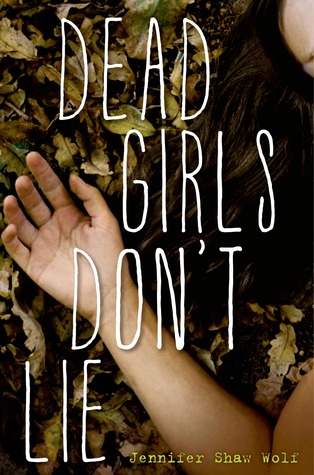
Dead girls don't lie

Dead Girls Don't Lie It's that time of year again-when I attempt to read all of the Whitney finalists: http://whitneyawards.com/wordpress/2014/01/31/2013-finalists/

9. Jennifer Shaw Wolf's Dead Girls Don't Lie is a YA finalist for the Whitney awards.

Jaycee's summer has gone unexpectedly awry. Her best friend, Rachel, is dead--murdered. And Jaycee is torn by guilt, for not being there for Rachel the night she died (she deliberately ignored her texts to spend time with a boy at a party). But after receiving a strange video from Rachel, Jaycee starts to investigate Rachel's death. And the more questions she asks, the more questions she finds. Jaycee isn't sure who to trust, but if she can't figure it out, she might be targeted by the same people who targeted Rachel.

I enjoyed this one--it was cleanly written and the tension builds nicely. If I was frustrated with Jaycee because of her insistence on keeping secrets (rather than enlisting the help she desperately needs), I also realize there might not have been as much of a story.

Tuesday, February 4, 2014

These Broken Stars

8. These Broken Stars, by Amie Kaufman and Meagan Spooner

These Broken Stars (Starbound, #1) I'm always a little cautious about sci-fi--sometimes I love it, sometimes I really don't (for instance, I wasn't as enamored of the Beth Revis series so many people love). But this came highly recommended by a friend--plus, I'm a sucker for books about girls in beautiful dresses. (I know, don't judge a book by it's cover--but everyone does). And red-heads.

I really enjoyed this book, which starts with a Titanic-like premise. Lilac LeRoux is one of the richest girls in the galaxy; her father owns the massive luxury spaceship she's traveling on. She has almost nothing in common with Tarver Merendsen, a military hero also traveling on the Icarus, save a chance meeting on board. What starts pleasantly enough turns sour when Lilac turns him down--for his own good--and they go their separate ways. Or so they think.

When the Icarus is unexpectedly pulled from hyperspace, the two find themselves sharing an escape pod. And when their pod crash lands on a peculiarly deserted, terraformed planet, they find themselves relying on one another to survive, to get the crash site of the Icarus, and wait for rescue. But what they find about themselves during their trek is the real story.

Yes, there is a fair amount of romance here. But both characters also undergo interesting character-arcs, and the writing in general was lovely. I really enjoyed this book--though I'm still puzzling through my feelings about the ending. I can't wait to see what the authors do with the sequel. 

Sunday, February 2, 2014

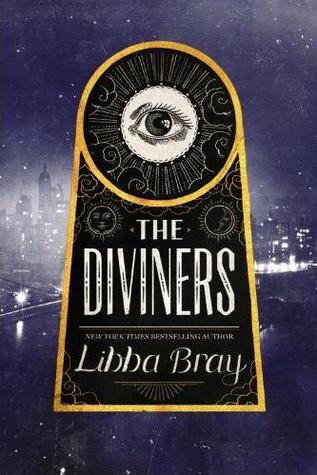
The Diviners

7. The Diviners, by Libba Bray

The Diviners (The Diviners, #1) I quite enjoyed this book--though it kept me up late more than one night in a row. Bray does an excellent job of creating period atmosphere, and a particularly creepy one at that!

It's the 1920s, and New York City is the hottest place in the world. Evie O'Neill longs to be there more than anything, and when her exasperated parents send her away from Ohio to live with her Uncle Will, the owner of a museum on the occult, she thinks this is the best thing that could have happened to her. But things aren't entirely what they seem in the city. Someone has roused the ghost of long-dead "Naughty John" and he's doing his best to fulfill his role in prophecy to rouse "the Beast" who will bring on the end of the world. And when people start dying, Evie comes to realize that her unique gift of knowing things about a person from touching something they own might help the police solve a particularly evil killer.

Evie is the main character here, but there are a host of other interesting characters, all with their own secrets. Mabel, Evie's best friend, who lives in the shadow of her revolutionary parents (Who are so taken up with various causes that they can't bother much with her). Jericho, a student who works for her uncle but has his own uneasy past. Theta, a Ziegfeld dancer with big dreams and a hidden gift. And Memphis, whose gift couldn't save his mother, but who spends his days dedicated to keeping his younger brother Isaiah safe.

One of the things I loved about this book was how the character's lives intersected in interesting ways, all set against the backdrop of 1920s NYC--the speakeasies, the booze, the jazz, even the quaint lingo. More than just period details, though, Bray smartly weaves in occult mysticism, various religious strains, philosophy (including Nietzsche) and so much more. With all that historical detail, it would be easy to bog the plot down, but Bray creates a terrific plot as well.


Sunday, January 26, 2014

The Golem and The Jinni

6. The Golem and the Jinni, Helene Wecker

The Golem and the JinniThis writer hit so many of my readerly pleasure spots that it's hard to know where to begin a review. The story is set in turn-of-the-twentieth-century New York, mostly in immigrant Jewish and Syrian neighborhoods, and the story begins with two different awakenings: in one, a tinsmith accidentally wakes a jinni when repairing a copper oil pot; in the other, a young Jewish immigrant wakes the golem he's had created for him on a voyage across the Atlantic (this, despite being warned not to waken the golem until he's reached the city). It's lucky for the golem that he does, as her master is soon dead of appendicitis and she finds herself adrift in New York City, masterless (and a golem's primary pleasure is in obedience to her master) but uncomfortably aware of all the needs and desires of the teeming city's residents.

Though neither has a name, they both quickly acquire them: the tinsmith names the jinni Ahmad and takes him on as an apprentice; and the golem is named Chava by a kindly rabbi who finds her wandering and helps her acclimatize to the disconcerting human world around her. And of course, it's no surprise to the reader when the golem and the jinni cross paths--but I found their shared journey delightful, thoughtful, surprising, and frequently moving. Chava struggles to control herself--if she is roused to anger, she might forget the qualities that make her human-like; nearly all golems must ultimately be destroyed because of this, and the rabbi who finds her, knowing this, struggles for some time with the question of what ought to happen to the golem. Ahmad struggles to piece together his missing past--the thousand years he's lost caught up in the copper pot and the mystery of how he came to be there.

There are so many things I loved here: the gorgeous writing, the intricate historical settings (it took Wecker 7 years to write this), the interesting questions raised about what makes us human (or not), what we want from our lives and what we are willing to sacrifice to get there, the touches of the fantastic. And of course, the lovely, complicated relationship between the two main characters.

Wednesday, January 22, 2014

A Nothing Named Silas

A Nothing Named Silas, by Steve Westover.
(I read this one last year, but am just now getting to the review . . .)

A Nothing Named SilasI thought the book started really promisingly. Silas has trained his whole life to be accepted into one of the elite units (Command), only to have a chance accident result in his being drafted into the lowest of the units: Labor. Once there, Silas finds himself repeatedly humiliated and abused by Taelori, the Labor Regent. But once he passes her seemingly arbitrary tests, he's welcomed into the group. However, things aren't entirely what they seem (of course!): Silas stumbles across a group of rebels who want to change the system of government and invite Silas to join them. Between the growing number of secrets he's learning to keep and a girl he's coming to admire, Silas finds life quite complicated: who should he trust? The Regent who has abused him, or the revolutionaries who might not be telling the whole truth.

The story as a whole moves pretty quickly. For a dystopian world, this felt new, like something I hadn't seen before. However, once Silas became established in Labor, I had a hard time relating to Silas, whose sympathies seemed attached to a pendulum and changed frequently, depending on what he'd just been told. I wanted Silas to trust his own judgment a little more. I also felt a little underwhelmed by the big secret--I know some readers/reviewers loved the climax reveal, but it didn't quite work for me. 

Monday, January 20, 2014

Steelheart

5. Steelheart, Brandon Sanderson

I wasn't quite sure what to expect of this, because the post-apocalyptic, super-hero genre seems pretty well saturated. But this book was terrific.

Steelheart (Reckoners, #1)A few years before the start of the book, Calamity happened. (It's never quite clear what Calamity is, though I assume later books in the series may make this clear). And following Calamity, the world saw the rise of Epics, ordinary humans with powers so extraordinary that they soon ceased to seem human at all. In the opening chapter, life still functions as usual, with many people, David's father included, believing that heroes will rise to challenge the Epics. But then Steelheart comes to claim Chicago as his own, and all hell breaks lose. The opening chapter was immediately riveting, including a few horrifying images that are going to remain with me for a long, long time. And in this sequence, David sees something no one else has seen: he sees Steelheart bleed, which means this Epic has a weakness. One he wants so badly to bury that he destroys the entire building where David is and any potential witnesses. David escapes by lucky chance.

Fast forward ten years, and David is obsessed with Epics. He's studied everything there is to know about them, including their weaknesses, with an eye to destroying them. And when the Reckoners (the only group of humans to fight the Epics, who have essentially taken over the world) come to town, David seizes his chance. Because not only does David want to fight epics, but he has a plan to take Steelheart down. But for his plan to work, he has to convince the Reckoners to trust him . . .

The world Sanderson creates here is fabulous: fascinating powers (and weaknesses) for the epics, interesting technology, and the character interplay among the Reckoners is fun to watch. But mostly, he keeps the action moving along so quickly that it's hard to put the book down. (My husband is currently listening to the audiobook version and I frequently try to initiate conversation only to find that he's just as sucked in by the world as I was. In short, he's oblivious). Sanderson even manages to raise some interesting moral and ethical questions about the nature of power and those who seek to wield it. Fun, fast, fascinating--a great read for people who like action, dystopian, super-heroes, or even just a good story.